Student Homelessness in California: A Growing Statewide Challenge
Introduction
California’s housing affordability crisis continues to drive student homelessness, as rising rents, stagnant wages, and a severe shortage of affordable housing leave many families unable to secure stable housing.
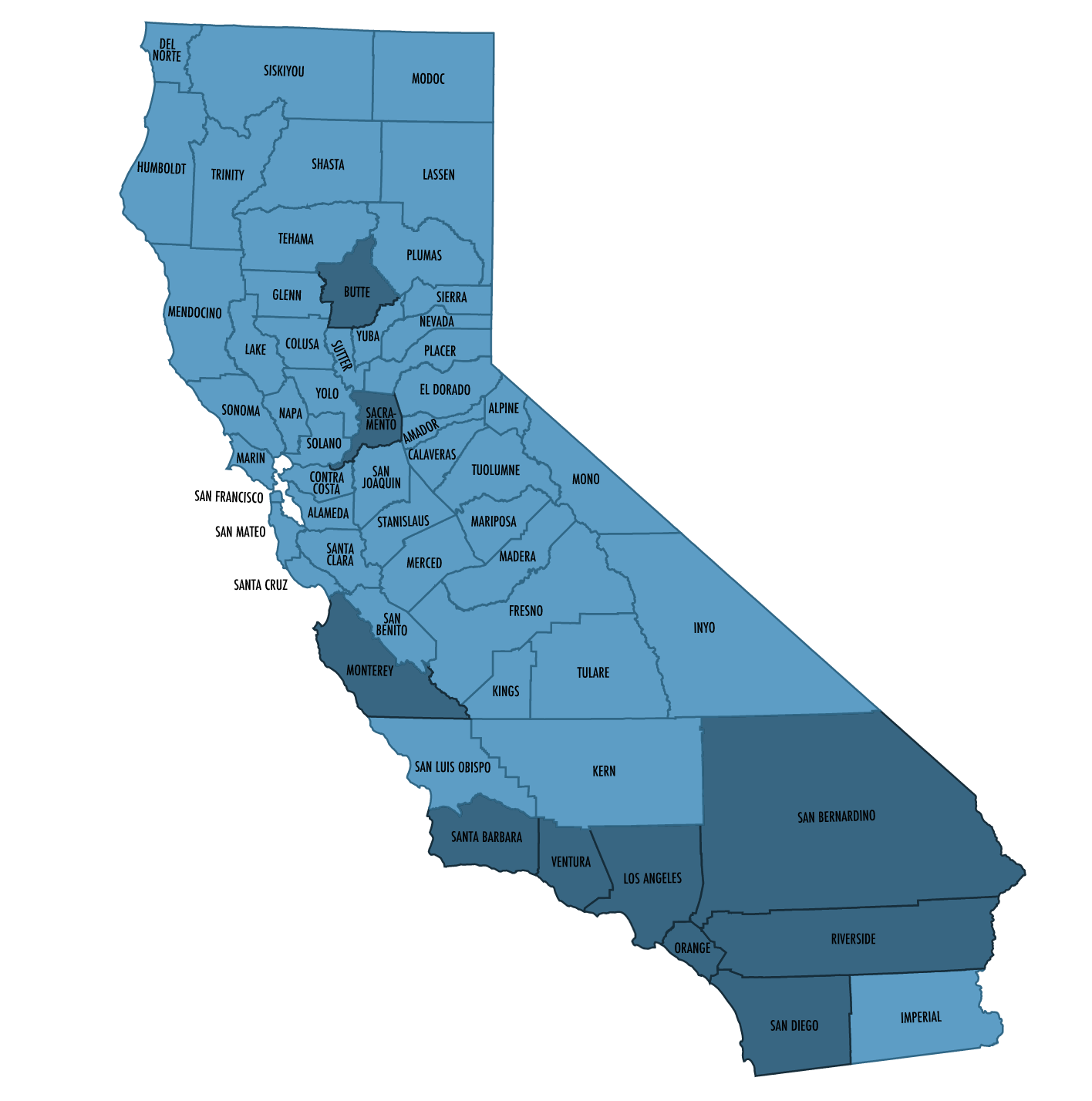
We analyzed data from the California Department of Education (CDE) from school years (SY) 2017–18 to 2025–26 to understand the prevalence, characteristics, and educational experiences of students experiencing homelessness (under the McKinney-Vento definition), along with policy considerations. Our findings underscore that mitigating student homelessness requires sustained investment and coordinated action across education, housing, health, and community systems. See the full report for a more comprehensive analysis.
This analysis is part of a larger study on student homelessness in the West. Explore the analyses for Arizona, Nevada, and Utah.
Key Findings At a Glance
Policy Considerations
Strengthen cross-system coordination to address student homelessness.
Students experiencing homelessness remain largely absent from the state’s broader homelessness strategy. Explicitly incorporating school-based homelessness data into statewide planning and establishing a formal partnership between the California Interagency Council on Homelessness and the California Homeless Education and Technical Assistance Center (HETAC) would better align housing, education, health, and human services investments with the needs of children and families experiencing homelessness.
Sustain investments in identification and data systems.
Assembly Bill 2375* established a stronger statewide framework for identifying students experiencing homelessness by requiring annual housing questionnaires and strengthening local education agency identification practices. Sustained state funding is needed to support homeless liaison capacity, staff training, and data systems so districts can consistently implement these requirements. Continuing investment in HETAC and leveraging successful county models—including those in Contra Costa, Los Angeles, and San Diego—can strengthen statewide implementation and support more consistent responses to student homelessness.
Target equity-focused supports for Black/African American and Native American students.
Prioritizing culturally responsive, place-based strategies in high-need counties, including expanded transportation assistance, attendance supports, school stability protections, and partnerships with trusted community organizations, can help reduce racial disparities in educational outcomes.
Strengthen academic recovery and postsecondary pathways.
Expanding academic and postsecondary transition supports (including tutoring, credit recovery, attendance interventions, dual enrollment, college advising, and Free Application for Federal Student Aid completion assistance) and partnerships among Grades K–12 systems, higher education institutions, and McKinney-Vento liaisons can strengthen postsecondary access and success for students experiencing homelessness.
Reduce absenteeism, school instability, and exclusionary discipline.
Advancing restorative, equity-centered discipline practices, improving transportation and attendance supports, and investing in community schools that integrate housing, health, mental health, and family services can promote greater educational stability for students experiencing homelessness.
Scale effective local models.
Several California counties, including Los Angeles, Contra Costa, and San Diego, have demonstrated promising approaches through coordinated attendance initiatives, integrated student supports, technical assistance, and cross-sector partnerships. Evaluating local efforts and investing in the expansion of effective practices statewide and maintaining flexibility to address regional differences in housing markets, student demographics, and service capacity can help strengthen responses to student homelessness across California.
*AB 2375 (signed into law in September 2022, https://legiscan.com/CA/text/AB2375/id/2609216) amended California Education Code §48851 to standardize and expand how schools identify students experiencing homelessness. All local education agencies (LEAs)–not just those receiving federal relief funds–must administer a housing questionnaire to every student/family. The questionnaire is based on state-developed best practices and includes information about students’ rights under the McKinney Vento Act. Before AB 2375, housing questionnaires were not consistently required across all districts and were often tied to specific funding streams like federal pandemic relief, including the American Rescue Plan—Homeless Children and Youth (ARP-HCY).
Media Contacts
Geneva Sum
Communications Director, UCLA Center for the Transformation of Schools
UCLA School of Education and Information Studies
424-259-5836
gsum@gseis.ucla.edu
John McDonald
Director, Sudikoff Institute
UCLA School of Education and Information Studies
310-880-5332
jmcdonald@gseis.ucla.edu
About the American Institutes for Research West Comprehensive Center
This study was produced through CTS’s partnership with the American Institutes for Research as part of the West Comprehensive Center, a federally funded project providing state, district and school leaders support to implement and sustain evidence-based programs and practices, with the goal of improving outcomes for educators and students.