State of Crisis 2026: A Deepening Crisis of Students Experiencing Homelessness Across California
Introduction
Nearly 300,000 California K-12 students experienced homelessness in the 2024-25 school year, a new statewide high and a 10% increase from before the pandemic.
Black and American Indian/Alaska Native students are affected at the highest rates. California just made a historic $116 million one-time investment to identify and support students experiencing homelessness. Our analysis breaks the data down by district and county, pinpointing ideal focus areas for the state.
This update to our 2020 State of Crisis report examines what has changed, who is most impacted, and what the data now demands from California’s leaders and student-serving systems.
Key Findings at a Glance
The crisis is growing. Student homelessness has reached record levels in California and affects nearly 300,000 students statewide.
Student homelessness is an educational equity crisis. Housing instability affects attendance, academic achievement, graduation, and college-going.
The crisis disproportionately affects certain students and communities. The report documents significant racial and geographic disparities across California.
California has an opportunity to lead. The evidence points toward practical, evidence-based policy solutions to strengthen educational outcomes for students experiencing homelessness.
Inside the report you’ll find:
- Statewide trends in student homelessness
- County and district analyses
- Racial disparities
- Academic outcomes
- Graduation and college-going data
- Policy recommendations
Statewide Maps
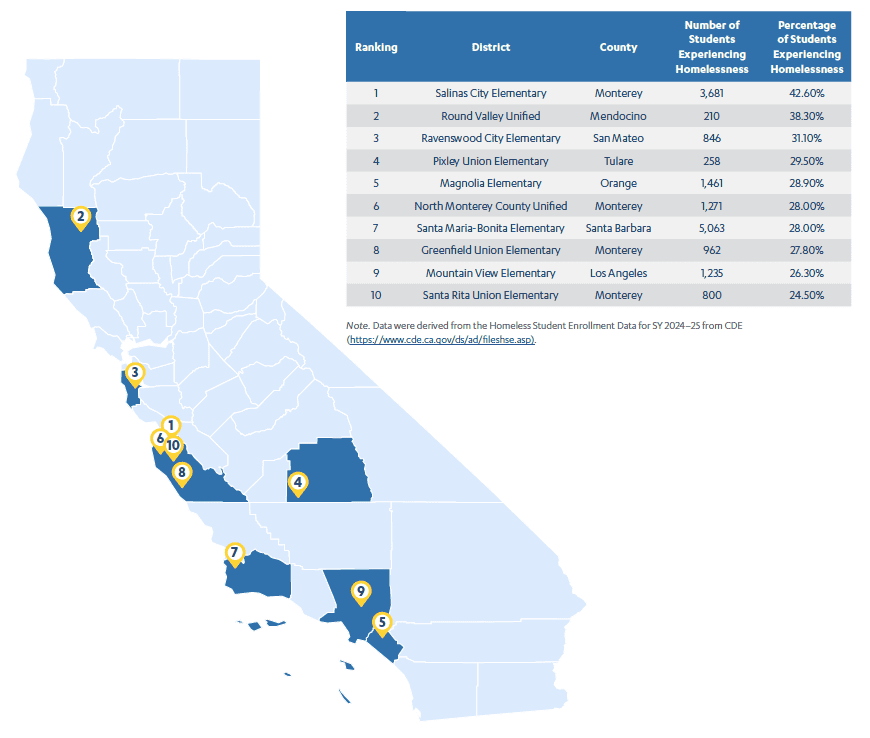
10 Districts with the Highest Rates of Students Experiencing Homelessness in SY 2024–25
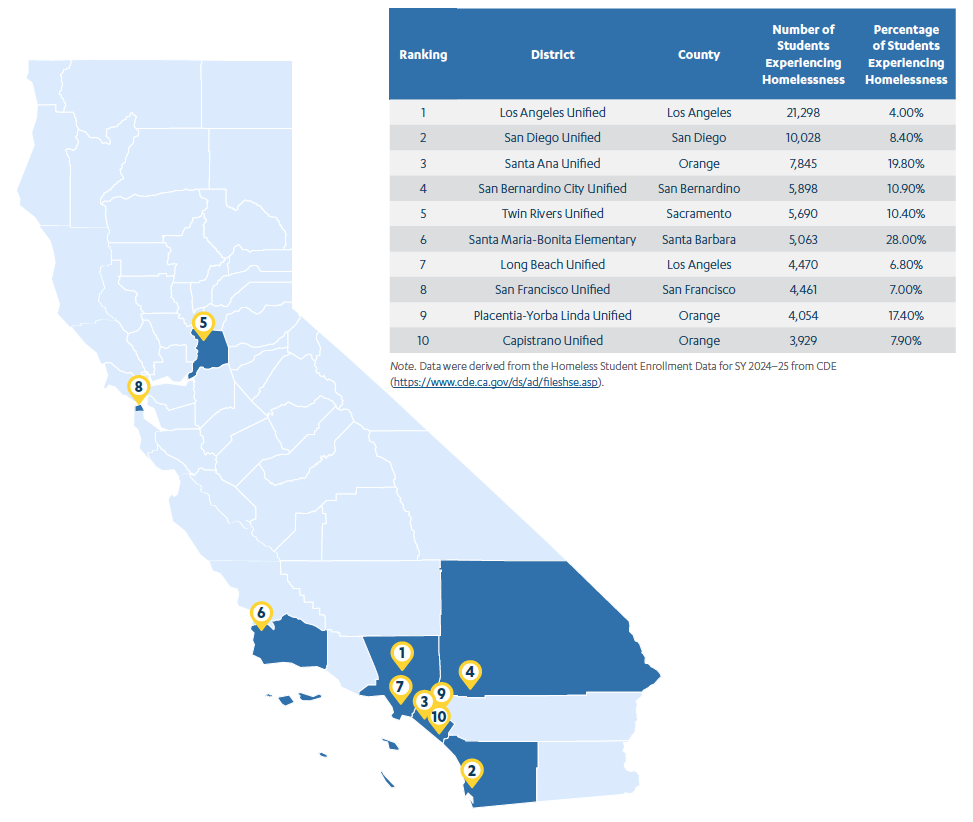
10 Districts with the Highest Counts of Students Experiencing Homelessness in SY 2024–25
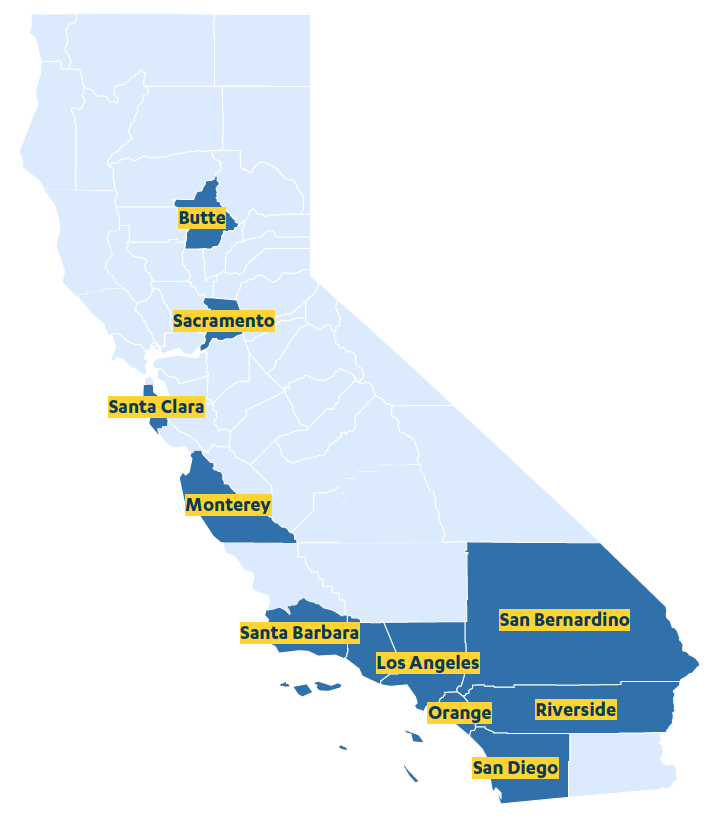
10 Counties with the Highest Counts of Students Experiencing Homelessness, SYs 2018–19 and 2024–25
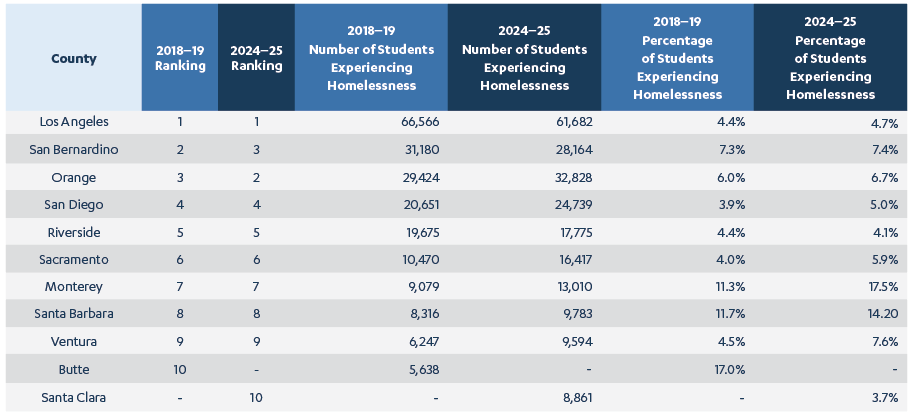
Southern California contains most of the 10 counties with the highest counts of students experiencing homelessness.
Recommendations
Prioritize targeted regional interventions using new state investments in areas of the state with high rates and numbers of young people experiencing homelessness.
Adopt, strengthen, and extend federal policy protections for students experiencing homelessness in California.
Establish a dedicated funding stream for districts statewide serving both the highest rates and counts of students experiencing homelessness.
Create stable, integrated systems of support for housing-insecure young people.
Monitor and address racial disparities among students experiencing homelessness.
Support academic recovery and postsecondary success for students experiencing homelessness.
The Authors

Grace Ha Eun Kim, Ph.D.
Research Analyst
Grace Kim is a Research Analyst at UCLA’s Center for the Transformation of Schools, supporting teams including the Educator Diversity team and the Computational Thinking Equity Project. She holds a Ph.D. in Education from the University of California, Irvine, with a focus on school climate and discipline. Her research addresses racial and socioeconomic inequality in school experiences and outcomes. She is the lead author of this report.

Joseph Bishop, Ph.D.
Executive Director
Joseph Bishop is Executive Director and Co-Founder of the UCLA Center for the Transformation of Schools. His scholarship examines the relationship between policy and educational equity, with expertise in students experiencing homelessness, community schools, school finance, and school discipline reform. He is the lead author of the original report, “State of Crisis: Dismantling Student Homelessness in CA.”
These numbers are particularly concerning given the extensive evidence documenting the harmful effects of housing instability on children’s development, health, and educational outcomes. The report makes clear that student homelessness is not only a housing issue, but a complex educational and developmental crisis requiring sustained, coordinated public action.Grace Kim, Research Analyst and lead author, Center for the Transformation of Schools
This new funding is the largest dedicated state funding to prioritize housing-insecure youth in the country. We look forward to working with our state’s policymakers and educators to ensure that California's most housing-insecure students have an equitable opportunity to succeed. Our hope is that this new research can serve as a roadmap for prevention and systems change.Joseph Bishop, Executive Director and report author, Center for the Transformation of Schools
Media Contacts
Geneva Sum
Communications Director, Center for the Transformation of Schools
424-259-5836
gsum@gseis.ucla.edu
John McDonald
Director, Sudikoff Institute
UCLA School of Education and Information Studies
310-880-5332
jmcdonald@gseis.ucla.edu

Related Work