Students with Experience in Foster Care
About the Project
How can we better support and prioritize the educational success of students who have experienced foster care?
For every one hundred youth who enter the foster system in California, only three will enter a four-year college or university. From the numbers, it’s clear that foster youth struggle against immense institutional and systemic barriers.
“Among Us” Podcast
“Among Us: Invisible Experiences Impacting Youth”
In our new podcast, Among Us: Invisible Experiences Impacting Youth, UCLA researchers unpack the foster care system through conversations with young people, practitioners, scholars, advocates and philanthropy to better understand how youth and families are facing barriers to thrive–and what we can do about it.
From frustrating bureaucratic barriers to extraordinary resilience and examples of innovative collaborations, each episode deconstructs a different aspect of the foster care system. Here’s a sneak peek at the conversations to come:
The history of the child welfare system
Systemic racism and the overrepresentation of children of color
Connections to policing, incarceration and slavery
The roles of schools, county and state agencies
Navigating higher education
Transitioning to adulthood and independent living
Reform vs. abolition
Youth advocacy and organizing
Listen on Apple Podcasts.
Listen on Spotify.
Listen on YouTube.
Listen to the podcast feed.
Publications
Our foster care research portfolio includes four studies:
Foster(ing) Youth in the California State University: Understanding the Vital Role of Campus Support Programs
Our team worked with CSU campuses to assess how the educational trajectory of former foster youth is shaped by campus support programs that provide academic support, social and emotional services and programs, independent living skills, job training, and financial aid guidance.
The MONARCH Room® Model: Implementation Findings From Trauma-Sensory Processing Rooms in Schools
CA MTSS Consortium scholars examined the implementation of the MONARCH Room® intervention, a trauma-informed program designed to improve school discipline and support students with a history of trauma, particularly those in foster care. Implemented in 12 LAUSD middle and high schools, the program trains designated school staff to provide targeted support and reduce suspensions. In collaboration with the CA MTSS Research Consortium and Comprehensive Coordinated Early Intervening Services (CCEIS), we evaluated the program’s effectiveness and challenges through surveys and focus groups.
Understanding Belongingness, Support, and Perseverance: An Exploratory Study of the Educational Experiences of Foster Youth in California
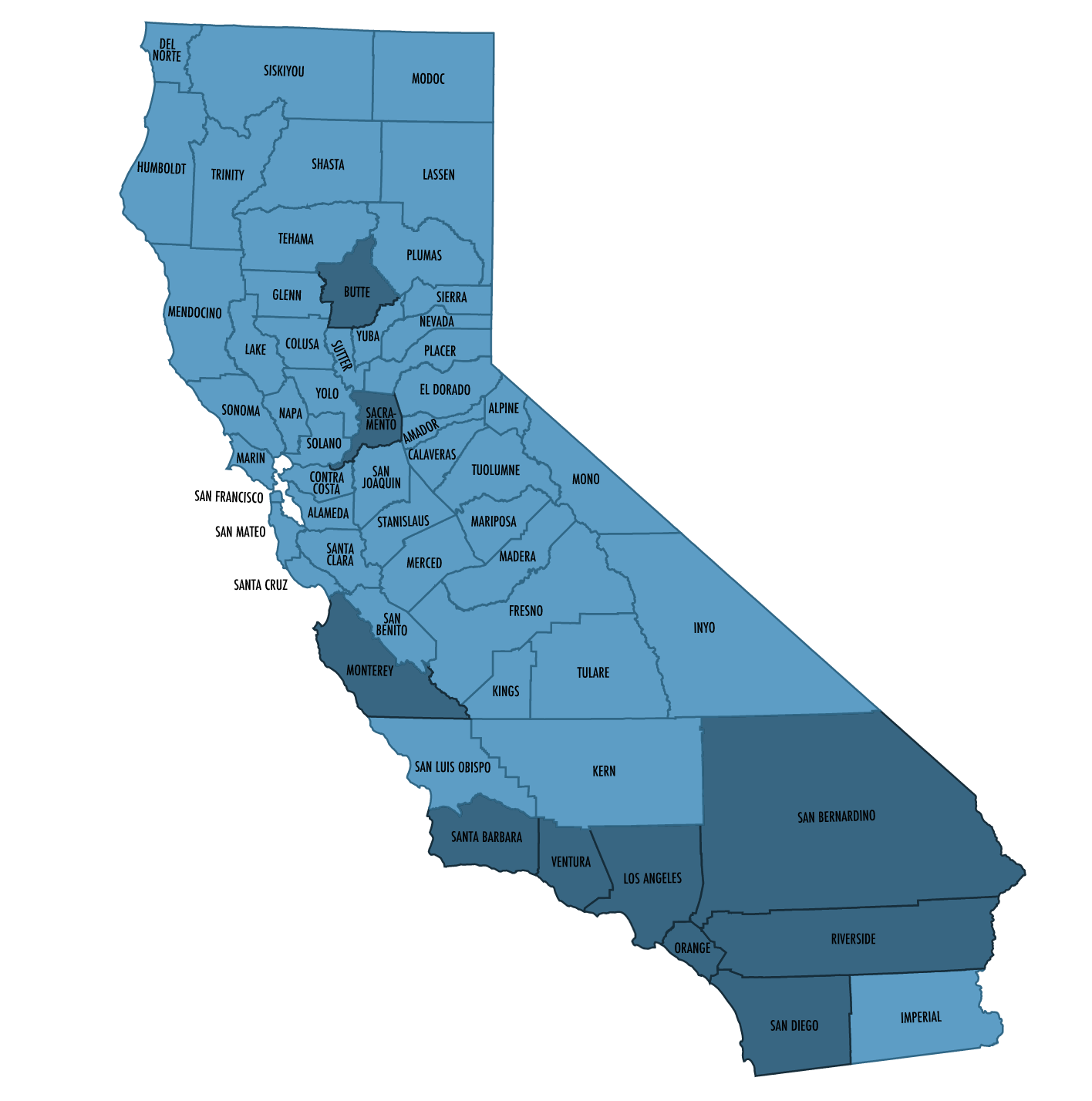
Our team worked directly with current and former foster youth through an equitable, youth-centering approach to research known as Youth Participatory Action Research (YPAR) to better understand the obstacles they face and the support they need. This study looks at the state of foster youth in all 58 California counties, from early education through higher education.
School Instability Among Foster Youth in Los Angeles County: Risk Factors and Perspectives of the County’s Transportation Initiative
Research has shown that midyear school changes are associated with poorer academic outcomes and socioemotional wellbeing for foster youth. Foster youth who experience multiple school changes may also experience higher rates of chronic absenteeism. Our team partnered with the Department of Children and Family Services (DCFS), Los Angeles County Office of Child Protection (OCP) and Los Angeles County Office of Education (LACOE) to assess the effects of a private transportation service in transporting foster youth across the county to their school of origin.
Related Work