The MONARCH Room® Model: Implementation Findings From Trauma Sensory Processing Rooms in Schools
Introduction
Students with a history of trauma face unique challenges in the classroom and many educators don’t receive the necessary training and education to meet these students’ needs.
Students with foster care involvement are particularly affected, often experiencing multiple traumatic events that can impact their behavior and learning. The MONARCH Room® (Multifaceted Approach Offering New Beginnings Aimed at Recovery, Change, and Hope) intervention uses trauma-informed strategies to improve school discipline by keeping students engaged in learning rather than subjecting them to suspensions. Through the work of the CA MTSS Research Consortium and in partnership with Comprehensive Coordinated Early Intervening Services (CCEIS), the MONARCH Room® research team implemented the program in 12 Los Angeles Unified School District (LAUSD) middle and high schools, provided training for school staff known as Champions, and collected data through surveys and focus groups to evaluate the initiative’s effectiveness and challenges.
About the MONARCH Room® Intervention
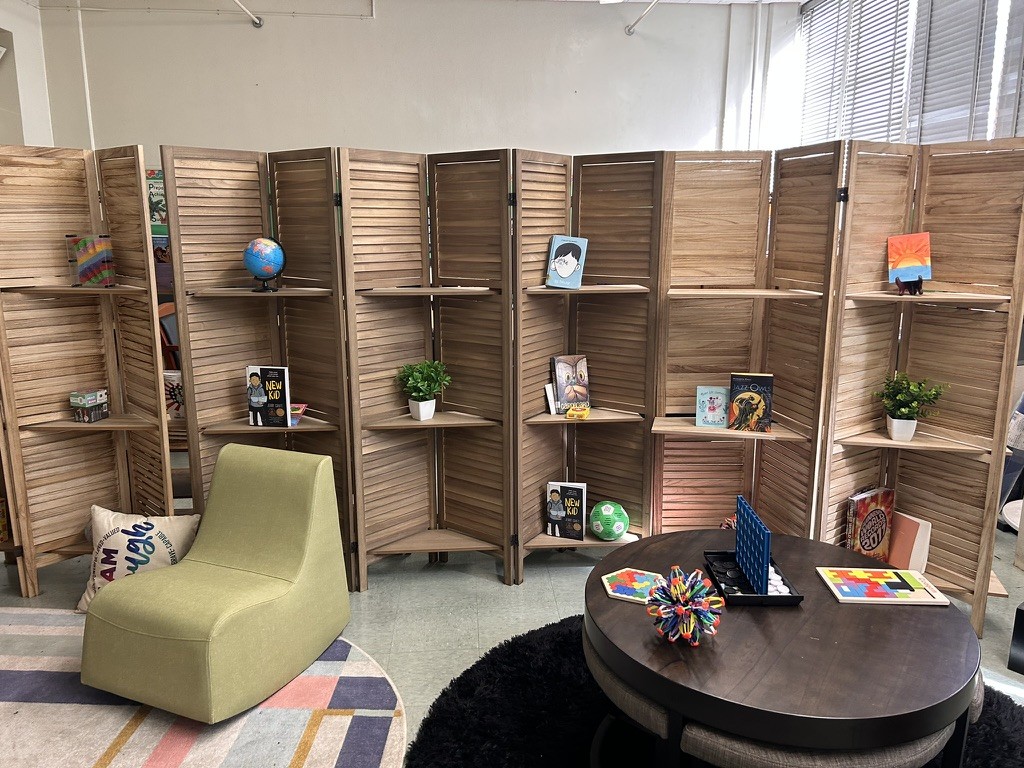
The MONARCH Room® is a sensory integration and de-escalation space designed as an alternative to exclusionary discipline strategies.
Facilitated by behavioral interventionists, it provides students a safe, nonpunitive environment to self-regulate by using structured sensory techniques to process trauma triggers. The room allows students to explore which sensory tools help them best manage their emotions, with visits monitored and documented.
Key Findings
Teachers and staff reported challenges with student behavior and environmental barriers to engagement.
Teachers and staff highlighted bullying, violent behavior, and defiance as key challenges. They identified structural and logistical issues within the school facility as barriers to engagement, including tension from sharing their space with other charter schools, where students feel there is preferential treatment.
A study participant reported:
“The environment is not conducive to trauma-informed teaching or learning. At my school, we have floor rot and no window screens. We try to distract students from this, but it would be helpful for the district to invest in this space.”
Teachers and staff showed a commitment to improving educational outcomes for Black and/or foster-involved students.
Staff members shared various strategies to support Black and foster-involved students, emphasizing the importance of mental wellness for both students and staff. This included morning greetings, soothing music, and events like yoga sessions to prepare staff. Programs such as Becoming a Man, Black Student Union, and Restorative Justice were used to nurture accountability without punitive consequences.
One study participant said:
“We try to do a lot of different things to provide to that population as well as all the kids, so we have [things] like food drives, shoe drives, clothing; like now we have racks for clothing. Families can come get clothes.”
Teachers and staff need additional training and resources to successfully implement the MONARCH model.
Teachers and staff expressed a need for concise, easy-to-share materials on the MONARCH Room® model to help them better inform colleagues. They requested further training on trauma-informed teaching and the neurobiology of trauma to increase staff buy-in. Staff were eager to see outcome data from the MONARCH Room® model.
A school staff member said:
“It would be nice to have things that we can share with our teachers, not like this [big] manual… but maybe [something] quick … something that summarizes like a page or several pages for our teachers to have to refer to in their classes, that they can see.”
Challenges in Implementing the MONARCH Room® Model
Staff Training
Champions struggled to facilitate staff training on the MONARCH Room® model due to varying implementation stages and limited time in professional development schedules. They faced challenges aligning staff on the model’s use and ensuring teachers had the necessary knowledge to effectively implement it.
In regards to the stages of coordinating training, one staff member said:
“Not knowing when to come in to start [training the school staff] on what’s happening…. When [should we] start that process, [is it] when the [MONARCH] Room® is set up?”
Securing and Setting Up the Space
Some Champions struggled to secure a central space for the MONARCH Room® and create a schedule for staff coverage. One school cited difficulty finding a location, while others had trouble fully decorating and equipping the space to make it welcoming for students. Even when space was secured, establishing a consistent schedule for supervision and clear operational guidelines remained a challenge.
One school staff member mentioned that they did not have the ability “to set up the MONARCH Room® as we originally had started to plan” and that “finding a dedicated space that was central enough to everyone that needs to utilize this on the campus was one of the difficult tasks.”
Conflicting Staff Responsibilities
Champions faced difficulty finding time to meet as a team due to their heavy workload and competing responsibilities. Staff members would often pull staff from other departments and struggle to balance the demands that come with the implementation process. One Champion noted that scheduling time for the full team to meet and align on next steps remained a significant challenge.
Staff discussed the common theme of sharing staff members for implementation. One school staff member said:
“The team members have a multitude of tasks and things that they’re required to do. And we’re kind of pulling from the same pool of Positive Behavioral Interventions and Supports (PBIS) [staff] and mental health [staff] and social workers [to help implement the model].”
Creating a Structure for How the Room Should Be Used
As schools progressed from setting up the physical MONARCH Room® to establishing its structure, they focused on creating clear protocols for student use, such as visit frequency, capacity limits, and return procedures. Schools wanted to ensure teachers understood the system first and then worked to educate students on the room’s non-punitive purpose. However, challenges remained in preventing misuse of the room, with concerns that some teachers were sending students there to avoid addressing student behavior issues.
One school staff member realized how important it is for the school to “outline what the MONARCH Room® is for…. And then we need to train the students. What it’s for, how it’s used, you know, the proper usage of it, that [it] is not punitive, just give them all that background. So they understand the space.”
Successes in Implementing the MONARCH Room® Model
Encouraged Staff Unification and Collaboration
Participants reported strong teamwork and support within their core school Champion team, with members stepping in for one another when needed. Even in schools facing difficulties with implementation, staff stayed positive and dedicated, believed in the model, and had the willingness to go beyond normal classroom practices to make it work.
MONARCH Room® staff believed other educators would be encouraged to join once they see progress being made. One staff member said: “Hopefully, the staff that comes in there, they’ll catch wind of what we’re doing and that could make our whole team even stronger.”
Provided a Space for De-Escalation and Reflection for the Student
Champion teams have reported that the MONARCH Room® helped reduce disciplinary referrals, improved students’ ability to self-regulate, and provided a safe space for emotional processing and conflict resolution. The room has prevented physical altercations and has given staff the ability to properly assess students’ emotional states more effectively. It has become a space where students can receive individual attention when struggling in class.
The Champions have credited the MONARCH Room® for helping to create a safe space for students to process their emotions and handle conflict. One Champion said:
“I credit the MONARCH Room® for stopping, at least since the semester began, four fights…. There have been some students who have been heated and they would have thrown hands, but they came here [to the MONARCH Room®] instead.”
Created Shifts From Punitive Culture and Approaches to Discipline
Champions have reported that implementing the MONARCH Room® model has helped staff shift from reactive to proactive approaches, moving away from punitive discipline toward a more holistic, child-centered approach. They emphasized that the model has been key in adapting to the needs of today’s students and addressing behaviors in a more constructive way.
One Champion stressed that:
“This is a different generation, and they think differently, and we have to deal with things differently because what was working before no longer works. Moving away from that punitive mindset.… It’s not so disciplinarian now, it’s more looking at the whole child and what’s going on.”
Recommendations
Provide educators and staff with more time to fully dedicate to the implementation.
Champions expressed frustration with limited time to fully implement the MONARCH Room® model due to competing priorities and existing responsibilities for the district. While staff are enthusiastic about the model’s potential impact, they struggle to find dedicated time for training and implementation.
“[I want more] dedicated time to really put energy and focus because I believe in this. But you know… I’m also a SPED (Special Education) person and [a] counselor…. But I would love to, not just for me, for my team as a whole or the school as a whole, to have more time to immerse themselves in this.”
Increase funding to complete and sustain the physical space.
Securing consistent funding has been a major challenge for MONARCH Room® model implementation, with several schools experiencing delays and cuts that hindered progress, including staffing shortages and lack of necessary resources like iPads for data tracking. There were concerns around compensating staff for extra duties, especially when it comes to covering the MONARCH Room® with certificated staff. Most schools remained committed to implementing the model to serve students’ needs. Some teachers set up smaller calming spaces in classrooms when the larger MONARCH Rooms® were not yet fully developed.
One staff member mentioned:
“I think one thing will be a funding source, because I’m pretty sure our teachers will be more inclined to give up their conference period if they knew that they would be compensated.”
Supplemental Reports
The LAUSD Training Survey Report and Training Fidelity Report examine the effectiveness of a three-day intensive training for staff on the trauma-informed MONARCH Room® model, including how well trainers facilitated the modules.
Download the LAUSD Pre-Post and Satisfaction MONARCH Training Survey Report.
Download the LAUSD MONARCH Training Fidelity Report.
Related Work